Surbhi K. Modi is a multidisciplinary artist who works with sculpture, textile and installations to create whimsical, allegorical works that fit into her non- linear universe.

01 — The Beginning
The work began with a visit to Dulwich Picture Gallery.
Founded in 1811, Dulwich is one of Britain’s most significant historic art institutions and the world’s first purpose-built public art gallery. Its collection of Old Masters, architecture and gardens create a unique dialogue between art and community.
For Surbhi K. Modi, that encounter raised a question that has long informed her practice:
What role can art play in bringing people together?
Her response was not to create an object to be observed from a distance, but a work that could be inhabited, experienced and shared.
Songs Under the Same Sky emerged from this dialogue between the Gallery’s history, its collection and Surbhi’s own exploration of spirituality, abstraction and public art.
02 — The Artwork
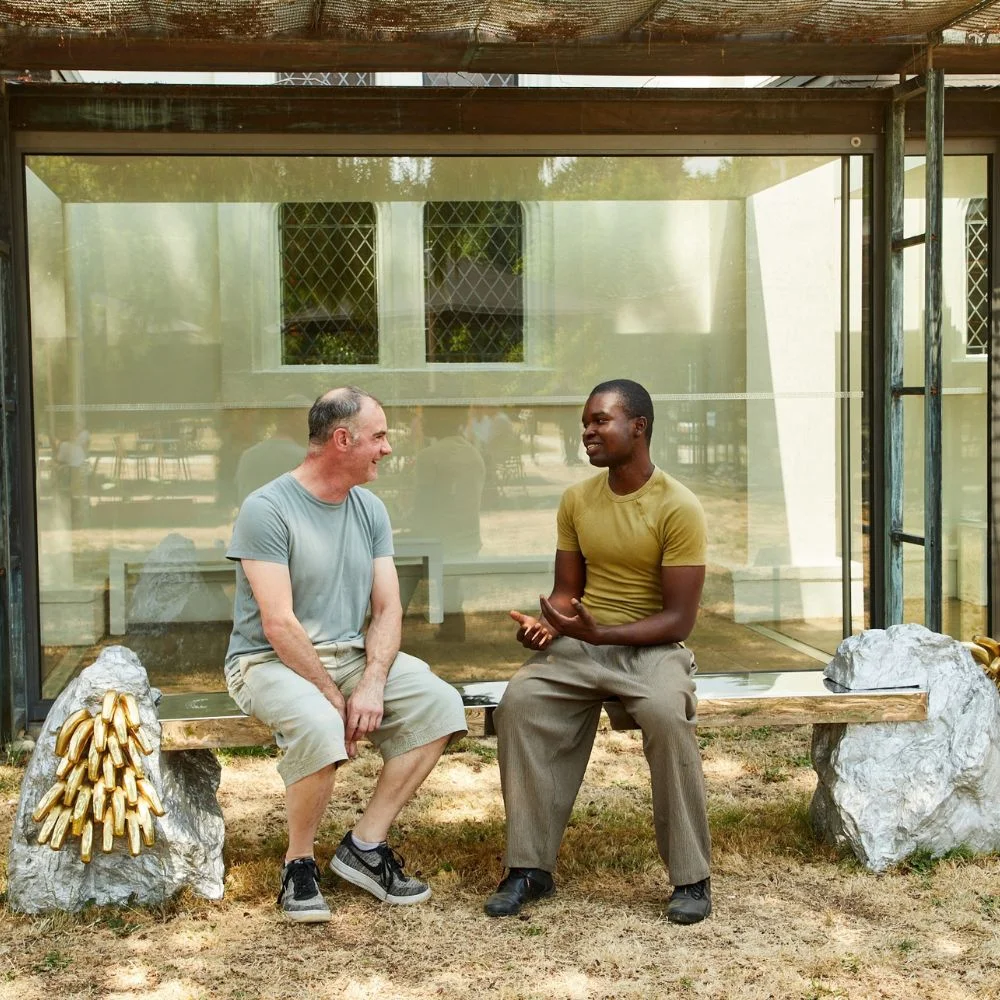
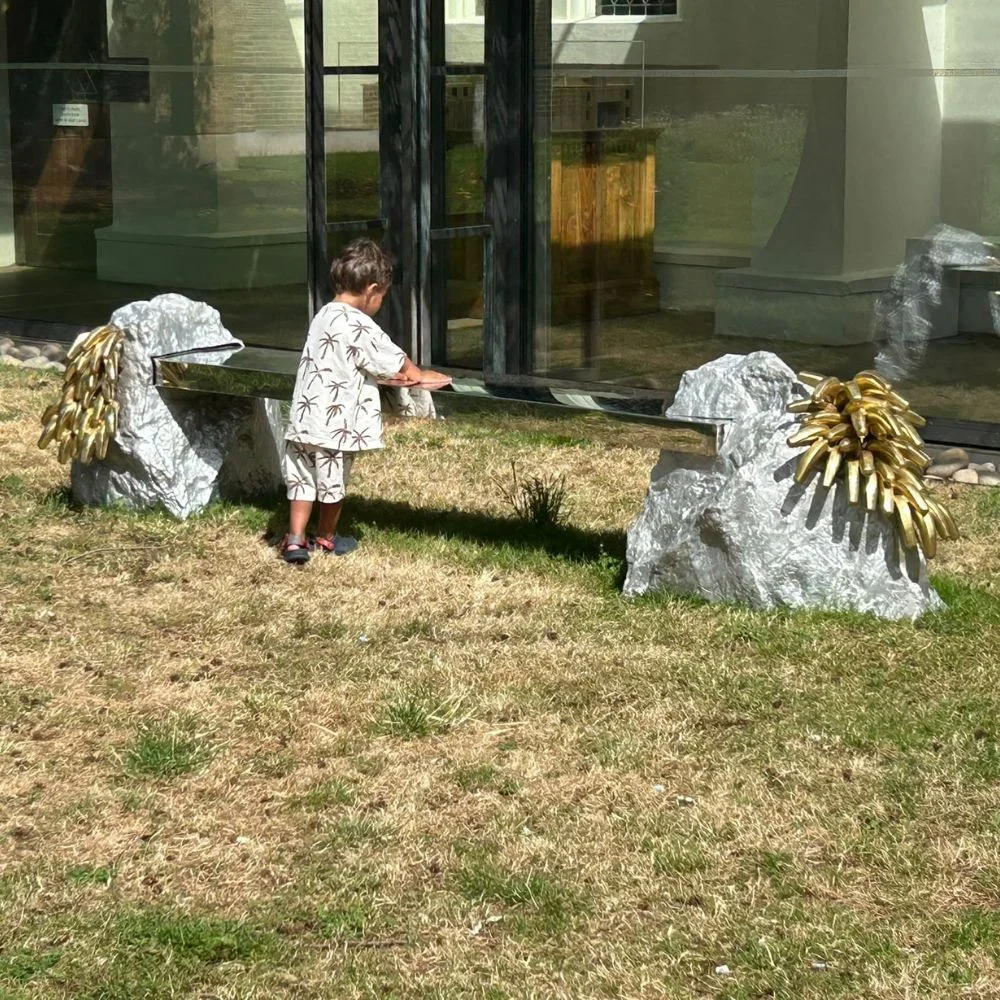
Two mountain-like forms meet to create a place to sit, pause and gather. Clusters of golden brass bananas punctuate the sculptural landscape, bringing Surbhi’s distinctive visual language of mythology, whimsy and transformation into a public setting.
Rooted in her ongoing Parvat series, the work draws on Neo-Hinduist ideas of tolerance, coexistence and collective belonging. The mountain becomes both an abstracted spiritual form and a physical space for encounter.
The familiar language of the bench is transformed. It is no longer simply functional furniture, nor an object to be looked at from afar. It becomes a meeting place.
A place to sit.
A place to talk.
A place to share the same sky.


The work enters into conversation with Jan van Huysum’s Vase with Flowers, part of Dulwich Picture Gallery’s historic collection.
Van Huysum’s still life celebrates abundance, beauty and the fleeting nature of life. Surbhi carries this conversation into three dimensions, translating the language of the still life into a contemporary sculptural environment.
The flowers become mountains.
The vase becomes landscape.
The still life becomes a place for people.
The work brings together two seemingly distant visual and cultural worlds, allowing art history to become something physical, social and lived.